Upon arrival, you'll rest, adjust to the altitude, and prepare for the next stage of your journey toward base camp.
Cho-Oyu Expedition
- 38 Days
Adult
From
$37,500.00
Per Adult
Description
Duration
38 Days
Group Size
1-15+

Cho-Oyu Expedition Overview
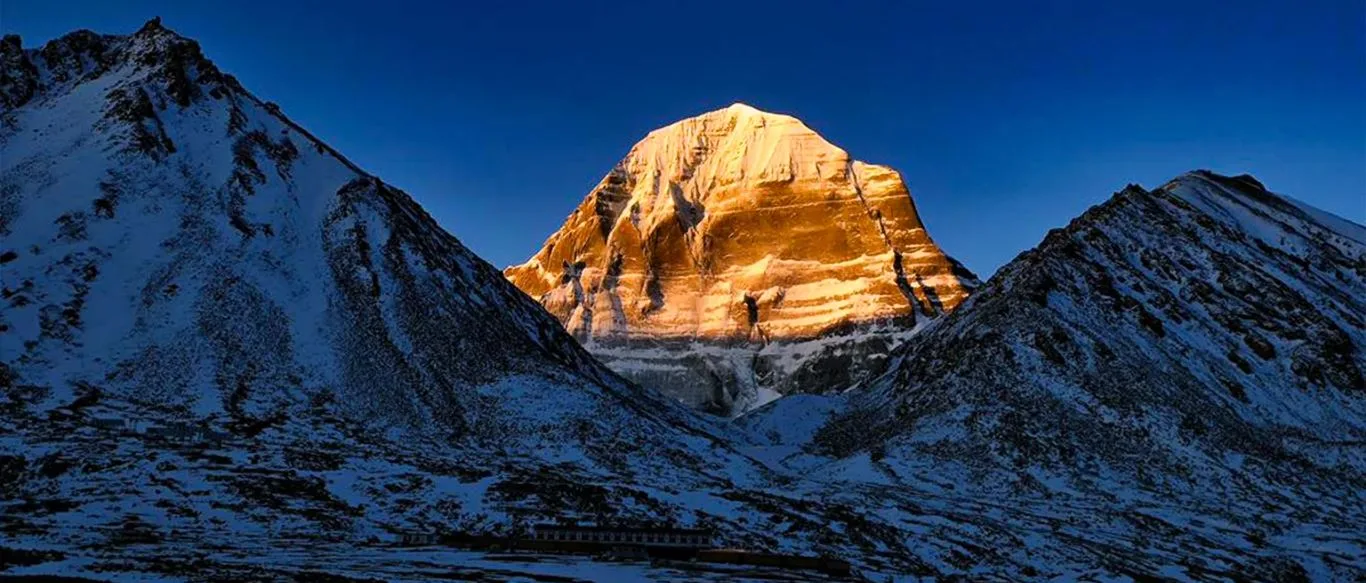
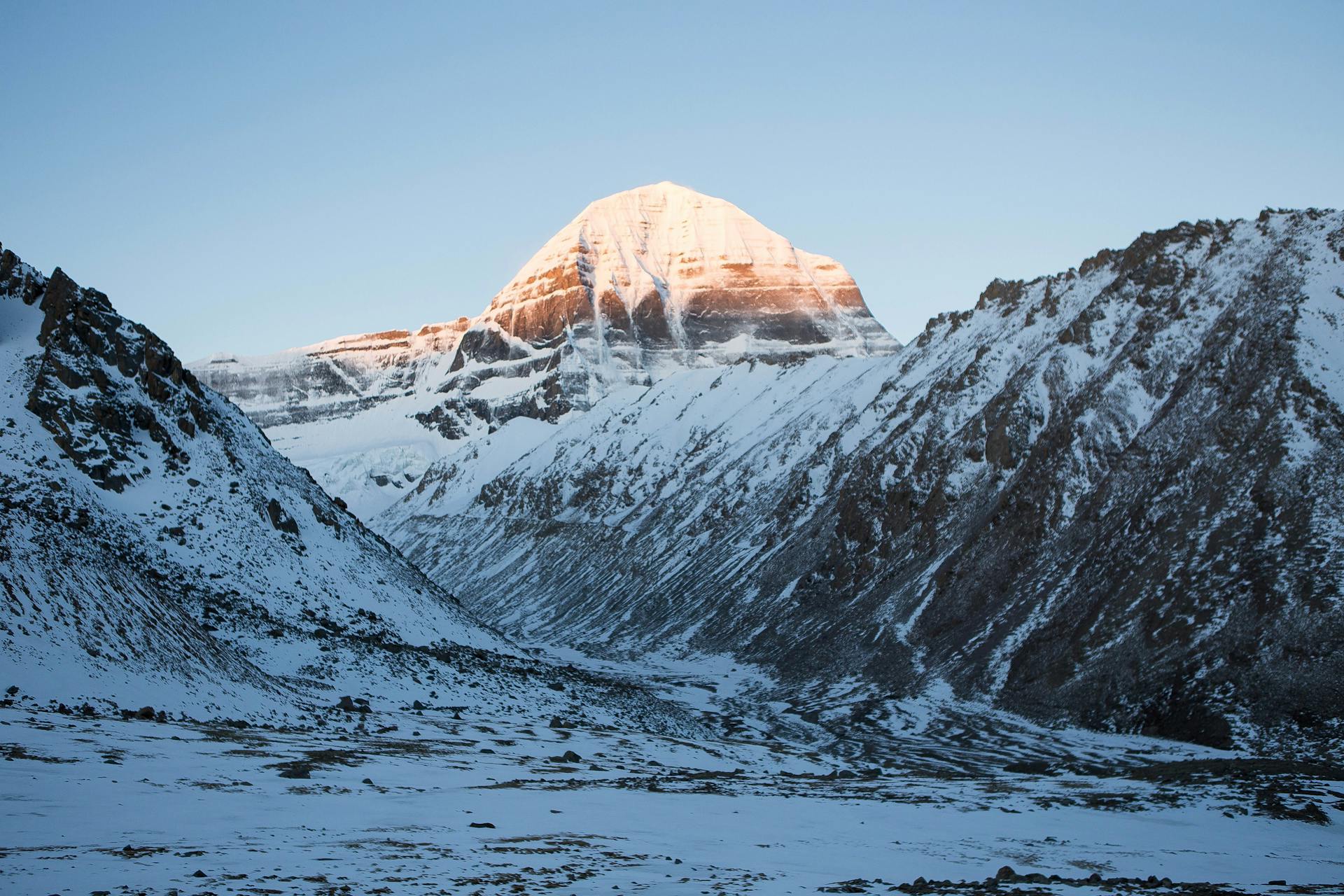
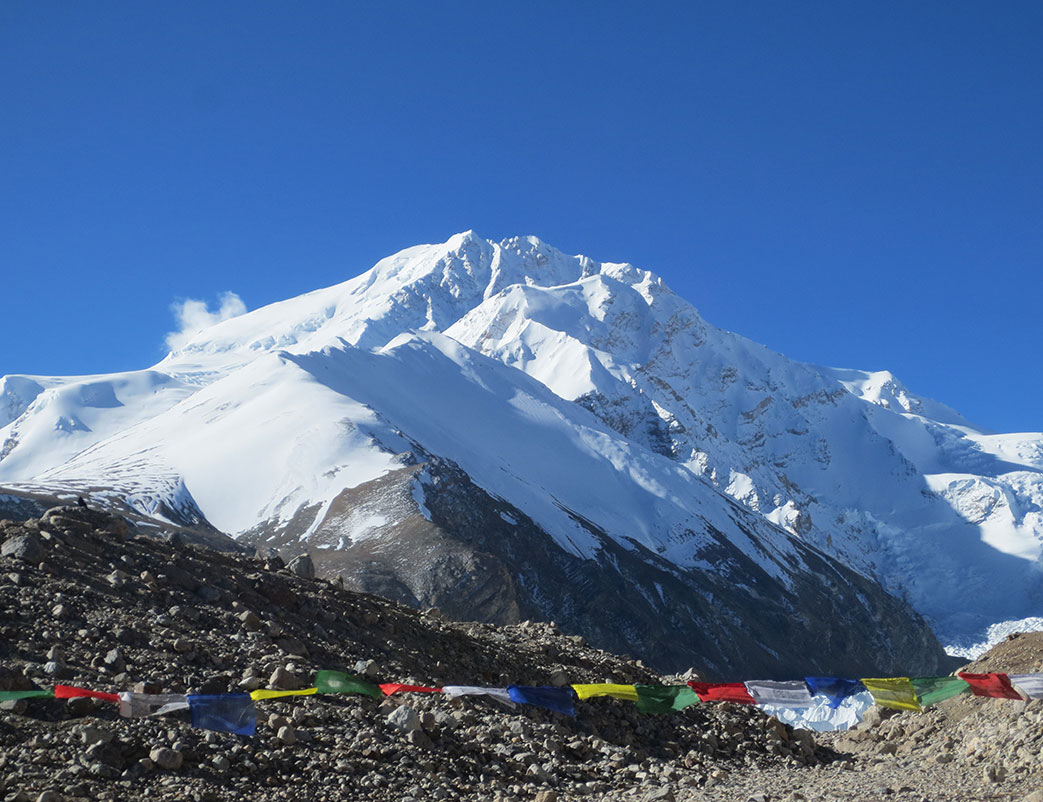
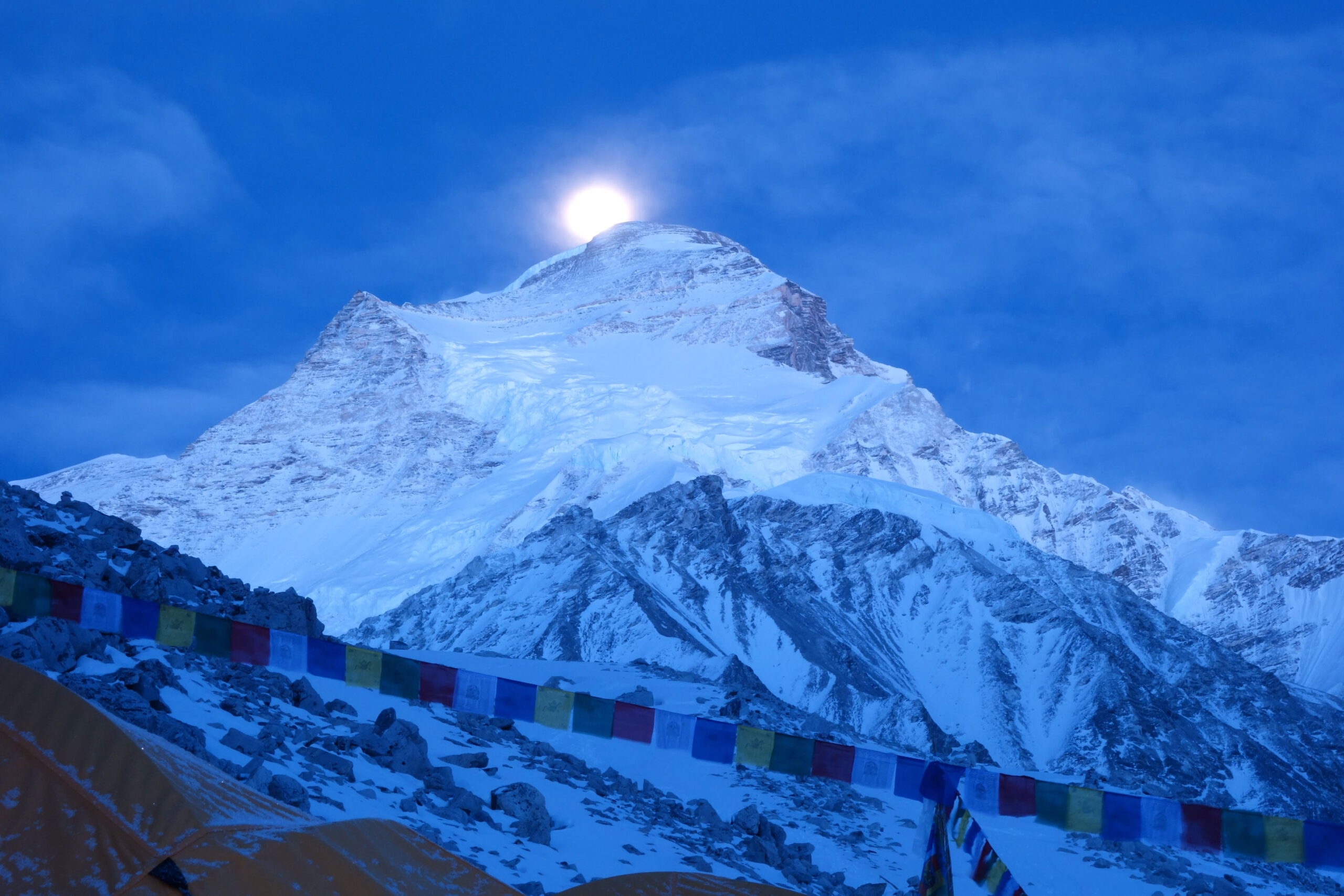
Mount Cho Oyu, which rises to an elevation of 8,188 meters (26,864 feet), is the sixth-highest mountain in the world. The majestic peak is situated on the border that separates Nepal from the Tibet Autonomous Region of China, approximately 20 kilometers west of the iconic Mount Everest. The Tibetan name Cho Oyu, meaning Turquoise Goddess, encapsulates its rich color and cultural significance and explains its deep-rooted traditions and folklore.
The Austrian expedition completed the first successful summit on October 19, 1954, marking a new milestone in high-altitude climbing. Mountaineers from all over the globe prefer Cho Oyu because it is the easiest summit among the 8000-meter mountains.
The history of Mount Cho Oyu will be explored in this blog, along with its remarkable height, precise location, and distinctive features that contribute to its significance in the Himalayan landscape.
Included
- To ensure your safety and provide a smooth arrival experience, Asian Adventures offers complimentary airport pick-up and drop-off services for both international and domestic arrivals and departures.
- Representatives of Asian Adventures will be waiting for you at the airport with an Asian Adventures banner and your name placard for easy identification. The representative will also carry an official company ID card for verification.
- According to the trekking package itinerary, Asian Adventures arranges three nights of accommodation in Kathmandu in your selected hotel category, ranging from tourist-standard to five-star hotels.
- Asian Adventures provides experienced, government-authorized (licensed) high-altitude trekking guides throughout the trekking period.
- Surface transportation required during the trek and in major cities, as specified in the itinerary, is included.
- As per the itinerary, Asian Adventures arranges regular domestic flight tickets from Kathmandu to Lukla and Lukla to Kathmandu for trekking members and guides.
- During the trek, Asian Adventures provides comfortable accommodation in carefully selected tea houses (excluding chain hotels).
- Most lunches are taken along the trekking route, while breakfast and dinner are served at the tea house where you stay overnight. Asian Adventures provides clean and freshly prepared breakfast, lunch, and dinner, along with tea or coffee, from the tea house menu throughout the trek.
- To ensure your comfort and protection from cold weather, we provide clean and warm down jackets and sleeping bags during the trek.
- Asian Adventures allows up to 15 kg of personal trekking equipment per person, carried by porters, yaks, or mules during the trekking period.
- Since Everest Base Camp lies within the Sagarmatha National Park area, Asian Adventures provides all required national park permits.
- The Trekkers' Information Management System (TIMS) permit is mandatory for trekking in the Everest region. Asian Adventures arranges this permit for all trekkers.
- First-aid medical kits are provided for both trekkers and staff to ensure health and safety during the journey.
- Communication is an important safety factor in remote Himalayan regions. Therefore, Asian Adventures equips trekking guides with satellite phones for emergency situations.
- During your trek, Asian Adventures ensures clean, nutritious, and freshly prepared meals at tea houses.
- The quoted package price includes all official service charges, government fees, taxes, and VAT. There are no hidden costs beyond the stated price.
- Before departing Kathmandu, we invite you to join us for a farewell dinner at a traditional Nepali restaurant with a cultural performance. This provides a wonderful opportunity to experience Nepali culture and traditions.
- As a souvenir of your Himalayan adventure, Asian Adventures will present you with an Asian Adventures T-shirt, Pashmina, and company brochure before your departure.
Excluded
- Kathmandu offers a wide variety of high-quality restaurants serving Nepali and international cuisine. Therefore, lunch and dinner in Kathmandu (except the farewell dinner provided by Asian Adventures) are not included in the package cost and must be arranged by the client.
- Personal expenses such as snacks, packed foods, chocolates, energy bars, mineral water, soft drinks, energy drinks, alcoholic beverages, and cigarettes during the trek are not included. These items can be purchased individually according to personal preference.
- Expenses related to personal trekking equipment, laundry services, gratuities (tips), telephone calls, mobile services, internet usage, walkie-talkies, satellite phone usage, and other personal communication services are not included in the package.
- Trekking in the Himalayas is an adventurous activity conducted in remote mountain regions. For your safety, all participants must obtain comprehensive travel insurance before arriving in Nepal. The insurance policy should cover emergency helicopter evacuation, medical treatment, hospitalization, and other related expenses.
- International airfare to and from Nepal and the Nepal tourist visa fee are not included in the package cost and must be arranged by the traveler.
- Any additional expenses arising from unforeseen circumstances beyond our control, including natural disasters, adverse weather conditions, landslides, political disturbances, strikes, flight delays or cancellations, and changes in government regulations, are not included in the package cost.
- Costs associated with additional staff or services requested beyond those specified in the package are not included and will be charged separately.
- Any services not specifically listed under the "Package Includes" section will be considered additional services and will incur extra charges.
- Tipping is not included in the package price. Tipping guides, porters, and support staff is a customary practice in Nepal's trekking industry and is greatly appreciated as recognition of their hard work and service. The amount is entirely at the discretion of the client.
Travel Itinerary
Day 1 - Arrival in Kathmandu
Upon your arrival at the airport, you will need to obtain Nepal Entry Visa at the counter. After these procedures, one of our representatives will meet and greet you and transfer you to the pre-booked 3-star hotel for you to rest. You can freshen up and enjoy your evening in Thamel.
Day 2-6 - Rest And Preparation In Kathmandu, Including Completing Official Formalities, Processing Your Tibet Visa, Attending The Expedition Briefing, Checking Gear, And Last-minute Shopping.
While in Kathmandu, you’ll have time to rest and prepare for the journey ahead. This important phase includes completing official formalities, processing your Tibet visa, and attending a detailed expedition briefing where you'll be introduced to the team and expedition plan. You’ll also conduct a thorough gear check to ensure all equipment is ready, with an opportunity to purchase or rent any remaining items.
Additionally, you’ll have time for last-minute shopping for personal essentials. This preparation period is designed to make sure you are fully equipped, informed, and mentally ready for the adventure that awaits.
Day 7 - Drive To Kerung (1962 M)
After staying overnight in Timure, we will then resume our journey to Kerung. Kerung is a village in the Solukhumbu District and serves as a trading route between Nepal and China. The road leading to Kerung is equally adventurous and bumpy.
Day 8-9 - Drive To Tingri And Acclimatize (4300m).
After Kerung, we will then cross the border and enter Tibet, the autonomous state of China. We continuously drive uphill and finally reach Tingri. Tingri is an old settlement in Tibet that used to be an important trading point for farmers in Nepal and Tibet. The beautiful meadows, rivers with fresh water, and picturesque villages make Tingri a beautiful place to stop and acclimatize.
Day 10-11 - Drive To Chinese Base Camp (5100 M) And Acclimatize.
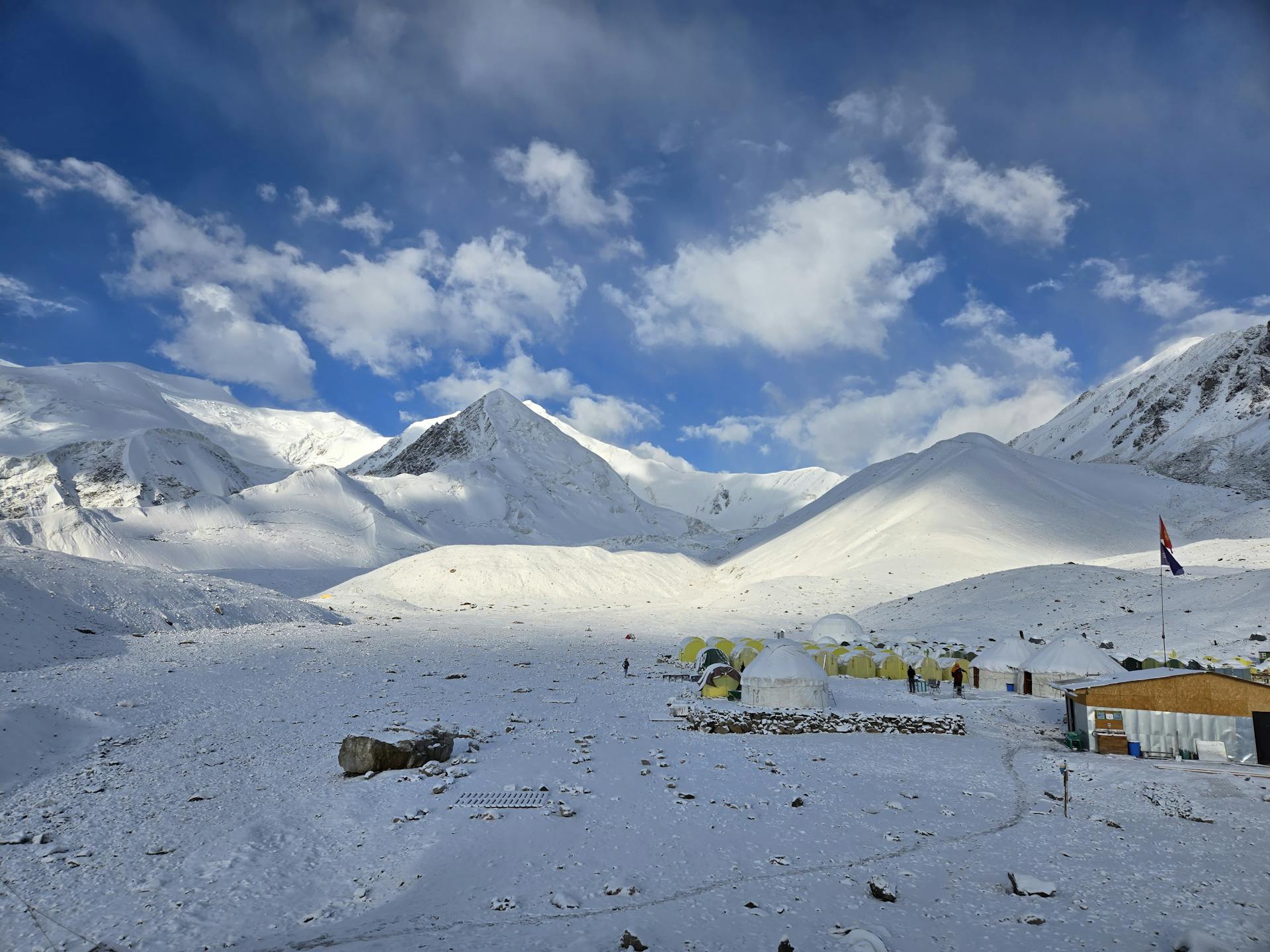
From Tingri, we drive to Chinese Base Camp for Cho Oyu and stay 2 more days for acclimatization. We must allocate some good time for acclimatization as we will be gaining high altitude within a day as we drive instead of trekking.
Day 12 - Trek To Intermediate Camp (5400 M).
We will be driving only to the Chinese Base Camp. After acclimatizing for two more days, we will then trek towards the Intermediate Camp. Our luggage and logistics will be carried by Yaks and Porters till the Intermediate camp. At the altitude of 5400 m, we will set up our intermediate camp with full board tented service.
Day 13 - Trek To The Advanced Base Camp (5700 M)
After the intermediate camp, we then climb up to the Advanced base camp set up at 5700 m altitude. We will segregate the gear and equipment required for climbing and prepare for our climb to Cho Oyu summit.
Day 14-30 - Climbing Period Of Cho Oyu (8,188m).
The following three and a half weeks are allocated for the climbing period of Cho Oyu (8,188m). During this course, we follow an acclimatization schedule of climbing with equipment and rest days. The summit climb requires setting up three higher camps on the upper flanks of the mountain above the base camp.
Camp 1 is set up at 6400m which is led by the route following the moraine up the main glacier which then turns towards the east to a tributary glacier requiring the climbers to climb steeply up the scree and snow.
The route to Camp 2 (7000 m) follows a moderate snow and ice ridge before a small ice serac out to a broad plateau.
After Camp 2, we need to climb up on a 30-degree snow slope to reach Camp 3 at 7400 m.
On the Summit day, we head towards the Yellow Band, a short but steep wall of rock and ice, technically challenging and demanding. After traversing the Yellow Band, we move up the West Face to the summit plateau. Most climbers stop at a set of prayer flags believing that they have summited the peak but there is still a 15-minute walk across the plateau to reach a point that offers spectacular views of the Gokyo lakes of Nepal, that point is the Summit of Cho Oyu (8,188 m).
After witnessing the extraordinary views of the mountain ranges including Mt. Everest, Ama Dablam, Nuptse, and mesmerizing Gokyo Lakes, we slowly retrace our trail to the Advanced Base Camp. The summit day requires 10-12 hours of walking on rocks, ice, and snow.
Day 31 - Trek Down To Intermediate Camp.
After the summit push or an acclimatization rotation, you’ll begin your descent by trekking down to Intermediate Camp. This stage allows your body to recover at a lower altitude while maintaining a steady pace. The trail may be technical and requires careful footing, but the drop in elevation often brings a sense of relief and renewed energy.
Along the way, you’ll retrace familiar paths, passing through dramatic mountain scenery. Upon reaching Intermediate Camp, you’ll rest, rehydrate, and reflect on your progress, preparing either for further descent or the next phase of the expedition.
Day 32 - Drive To Tingri.
Enjoy a scenic drive to Tingri, a high-altitude town on the Tibetan Plateau. Surrounded by breathtaking mountain views, Tingri serves as an important acclimatization stop before continuing the expedition.
Day 33 - Drive To Kerung.
After completing the expedition, you’ll drive back to Kerung, retracing the route through the Tibetan highlands. This marks the beginning of your journey home.
Upon arrival, you’ll rest and complete necessary exit formalities before crossing back into Nepal. It's a time to unwind and reflect on your successful adventure.
Day 34 - Drive To Kathmandu.
You’ll begin the final leg of your journey with a scenic drive back to Kathmandu, descending from the Tibetan Plateau into the lush landscapes of Nepal. The drive offers a chance to relax and reflect on your expedition.
Upon arrival in Kathmandu, you’ll check into your hotel and enjoy a well-deserved rest.
Day 35-37 - Sightseeing In Kathmandu
Kathmandu is a beautiful city with numerous attractive destinations. There are many heritages listed in the World Heritage List as well. You can go sightseeing around Bhaktapur, Patan, Bouddhanath Stupa, Swayambhunath, Pashupatinath Temple, or even roam around in the streets of Thamel trying some exotic cuisines. You can get beautiful souvenirs in Kathmandu that you can take back home for your loved ones.
Day 38 - Final Departure
If you have not signed up for any other Add-ons Adventure packages, it’s time to bid you farewell. One of our representatives will drop you off at the airport 3 hours prior to your scheduled departure.
Maps
Frequently Asked Questions
Although, Mount Cho Oyu is the sixth highest mountain peak of the world, expedition is considered one of the easiest 8,000er mountain peaks to climb. Still, do not mistaken yourself as easy peak to climb, as the peak in the Himalayas, and above 8,000 m. If you are considering climbing Mount Cho Oyu, you must first ask yourself several honest questions: Am I physically fit enough? Am I technically capable of handling the expected terrain and conditions? Am I mentally and emotionally strong enough for high-altitude expeditions? If you have any doubts, we recommend first attempting other 6,000-meter and 7,000-meter peaks in the Himalayas. Strong preparatory choices include Himlung Himal, Island peak, Mera peak etcetera all of which will test your endurance, skills, and decision-making ability and prepare for the Mt Cho Oyu expedition.
Mount Cho Oyu has an established route, reliable support systems, and well-organized logistics during the climbing season, as the peak is climbed by many mountaineers each year. This results in a higher success rate and comparatively lower objective risks. Among the 8,000-meter peaks, Mount Annapurna I (8,091 m / 26,545 ft) has a much higher fatality rate and is often considered the deadliest. Mount Dhaulagiri and Kangchenjunga are extremely brutal and are regarded as some of the hardest 8,000-meter peaks to climb. Mount Manaslu (8,163 m / 26,781ft) is moderately technical, with a more straightforward route compared to many other 8,000-meter mountains. In contrast, Mount Cho Oyu has one of the most straightforward routes and is considered the best preparatory peak for Mount Everest and other technical high-altitude expeditions.
Compared to most mountain expeditions around the world, climbing Mount Cho Oyu is undeniably expensive, although it is not as expensive as other mountain peaks like Mt. Everest or K2. However, for many climbers, the cost is justified by achieving mountaineering status. Several key factors contribute to high cost of a Cho Oyu expedition:
As we have a trained and experienced high altitude expedition cooks, they serve you scrumptious, nutritious, and healthy food. We use fresh vegetables whenever possible and have an extensive culinary repertoire. You are in fact encouraged to request your personal favorites to maintain good appetite and ensure you get enough calories. At higher camps we use freeze-dried packaged foods sourced from the USA or UK. These foods are high-quality, flavorful and easy to prepare at higher altitude. Your personal climbing Sherpa will melt sufficient ice for hot water, tee, coffee and a variety of juices. Different flavors of tea, coffee, snacks, juice and hot water will be available 24 hours a day ensuring you stay nourished and well hydrated throughout your expedition.
No. Due to Chinese government regulations, military-controlled sky, and restrictive policies, helicopter evacuation is not possible on the north side of Himalayas i.e. in the Tibet. Even at the Base camp helicopter evacuation is not permitted. As a result, evacuation must be carried out using yaks or human porters to bring you down to a lower altitude, followed by ground transportation to lower-altitude towns. This makes rescue and evacuation operations significantly slower on the Tibet side compared to much faster evacuation options available on the Nepal side.
From $37,500.00
Book This Tour

From $37,500.00
Book This Tour
You might also like