Island Peak Climbing
- 15 Days
Adult
Description
Duration
15 Days
Group Size
1-20+

Island Peak Climbing Overview
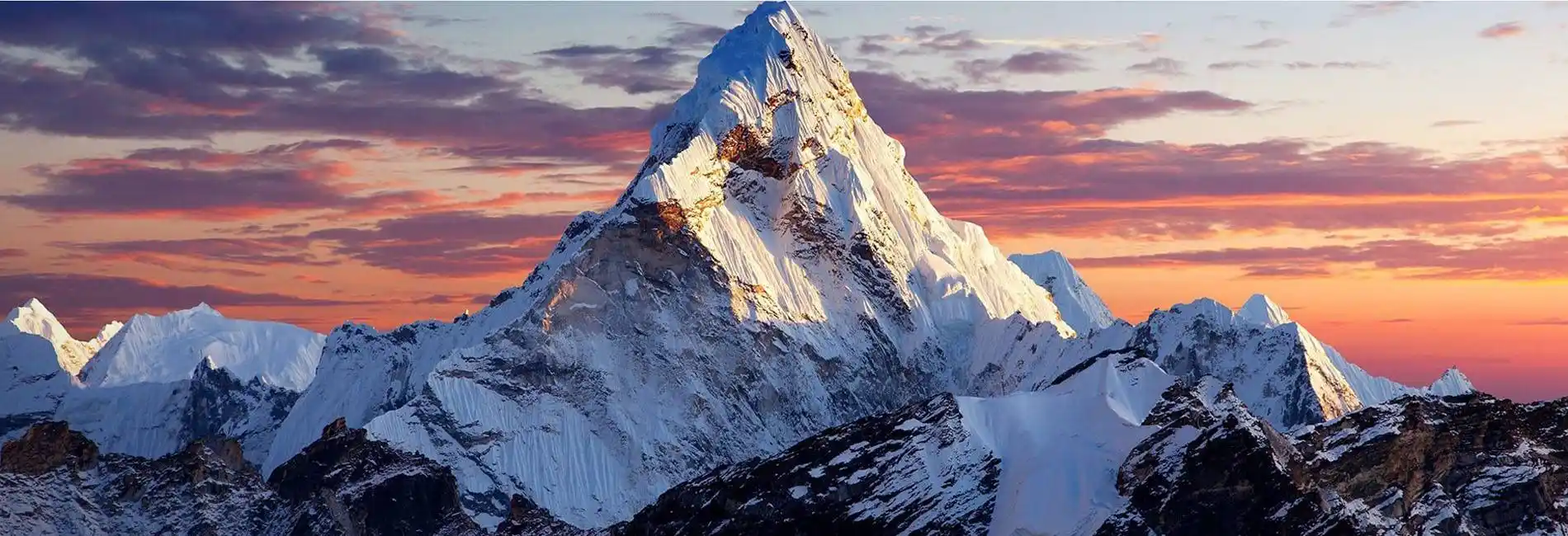
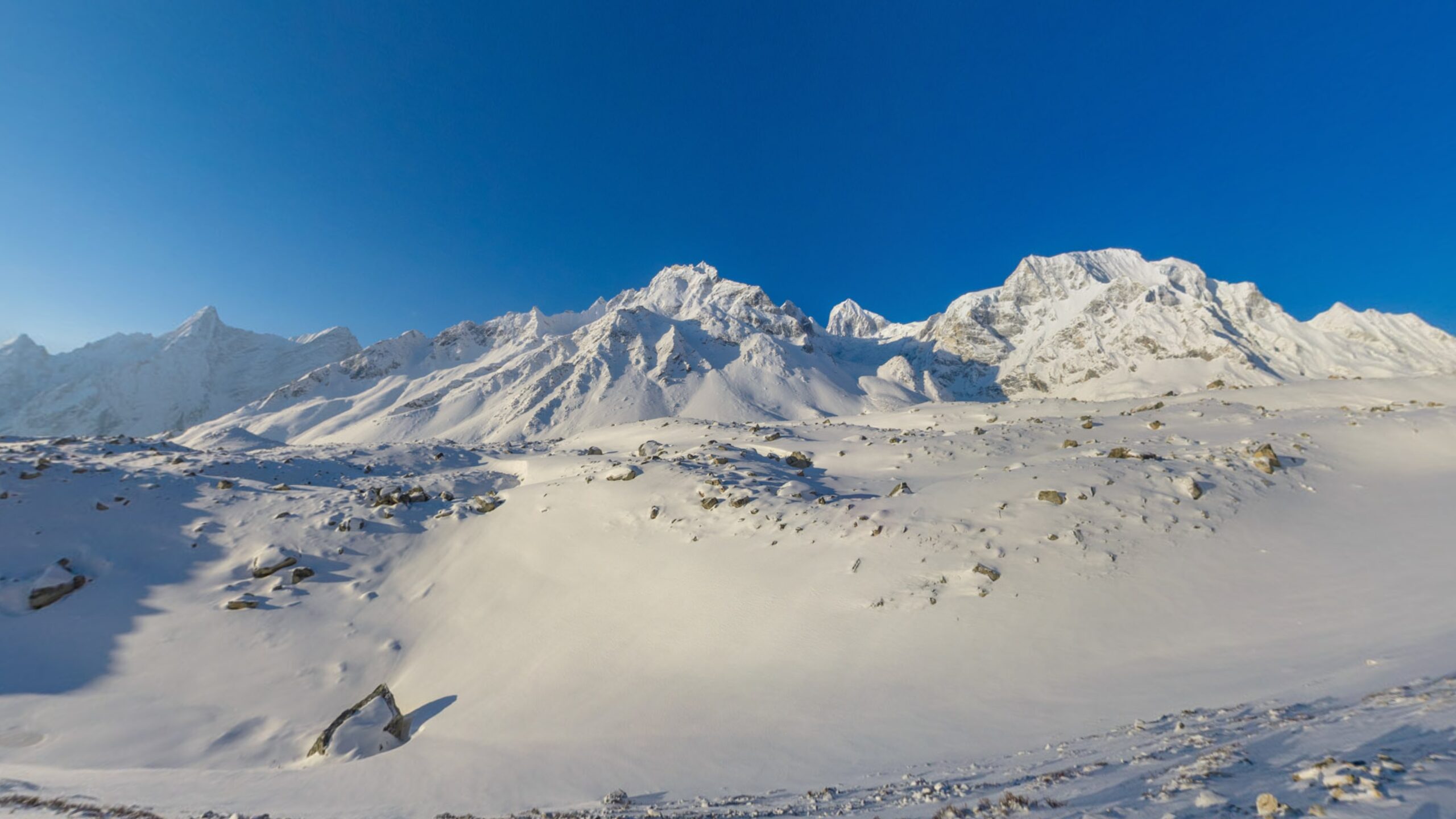
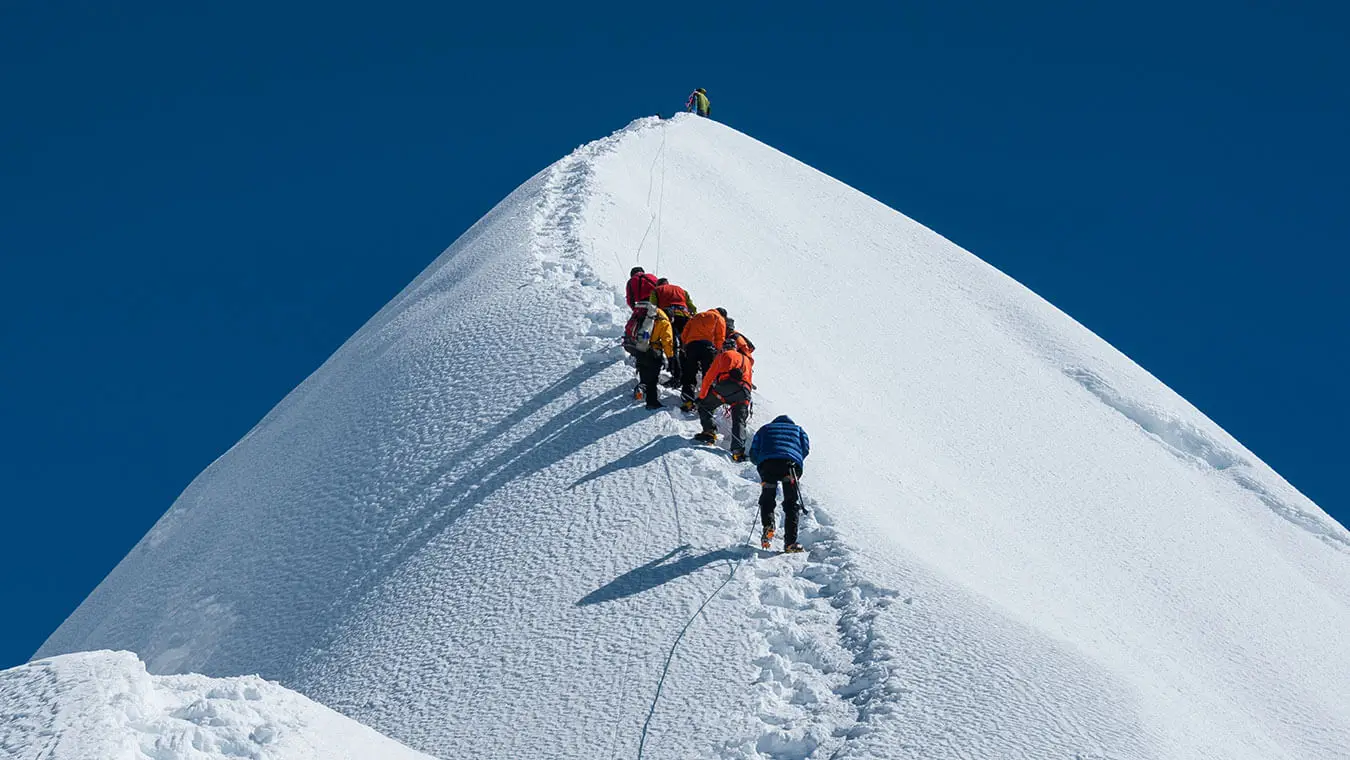
Island Peak, which is locally known as ‘Imja Tse’ is one of the most remarkable peaks in the eastern Himalayan region. Standing at the elevation of 6,189m (20,305ft), this aesthetic peak, which seems like an island in the sea of snow, is an extension of the south ridge of Lhotse Shar. Due to its exceptional beauty, thrilling semi-technical slopes, and remarkable views from the top of the Island Peak climbing is one of the most exhilarating climbing prospects in the Everest region.
Widely popular among the other trekking peaks in Nepal, Island Peak actually shares a great history with the biggest leap that mankind made in the mountaineering world. This trekking peak was used as a practice ground by Sir Edmund Hillary and Tenzing Norgay for oxygen apparatus before they successfully scaled Mount Everest on 29th May 1953.
Included
- To ensure your safety and provide a smooth arrival experience, Asian Adventures offers complimentary airport pick-up and drop-off services for both international and domestic arrivals and departures.
- Representatives of Asian Adventures will be waiting for you at the airport with an Asian Adventures banner and your name placard for easy identification. The representative will also carry an official company ID card for verification.
- According to the trekking package itinerary, Asian Adventures arranges three nights of accommodation in Kathmandu in your selected hotel category, ranging from tourist-standard to five-star hotels.
- Asian Adventures provides experienced, government-authorized (licensed) high-altitude trekking guides throughout the trekking period.
- Surface transportation required during the trek and in major cities, as specified in the itinerary, is included.
- As per the itinerary, Asian Adventures arranges regular domestic flight tickets from Kathmandu to Lukla and Lukla to Kathmandu for trekking members and guides.
- During the trek, Asian Adventures provides comfortable accommodation in carefully selected tea houses (excluding chain hotels).
- Most lunches are taken along the trekking route, while breakfast and dinner are served at the tea house where you stay overnight. Asian Adventures provides clean and freshly prepared breakfast, lunch, and dinner, along with tea or coffee, from the tea house menu throughout the trek.
- To ensure your comfort and protection from cold weather, we provide clean and warm down jackets and sleeping bags during the trek.
- Asian Adventures allows up to 15 kg of personal trekking equipment per person, carried by porters, yaks, or mules during the trekking period.
- Since Everest Base Camp lies within the Sagarmatha National Park area, Asian Adventures provides all required national park permits.
- The Trekkers' Information Management System (TIMS) permit is mandatory for trekking in the Everest region. Asian Adventures arranges this permit for all trekkers.
- First-aid medical kits are provided for both trekkers and staff to ensure health and safety during the journey.
- Communication is an important safety factor in remote Himalayan regions. Therefore, Asian Adventures equips trekking guides with satellite phones for emergency situations.
- During your trek, Asian Adventures ensures clean, nutritious, and freshly prepared meals at tea houses.
- The quoted package price includes all official service charges, government fees, taxes, and VAT. There are no hidden costs beyond the stated price.
- Before departing Kathmandu, we invite you to join us for a farewell dinner at a traditional Nepali restaurant with a cultural performance. This provides a wonderful opportunity to experience Nepali culture and traditions.
- As a souvenir of your Himalayan adventure, Asian Adventures will present you with an Asian Adventures T-shirt, Pashmina, and company brochure before your departure.
Excluded
- Kathmandu offers a wide variety of high-quality restaurants serving Nepali and international cuisine. Therefore, lunch and dinner in Kathmandu (except the farewell dinner provided by Asian Adventures) are not included in the package cost and must be arranged by the client.
- Personal expenses such as snacks, packed foods, chocolates, energy bars, mineral water, soft drinks, energy drinks, alcoholic beverages, and cigarettes during the trek are not included. These items can be purchased individually according to personal preference.
- Expenses related to personal trekking equipment, laundry services, gratuities (tips), telephone calls, mobile services, internet usage, walkie-talkies, satellite phone usage, and other personal communication services are not included in the package.
- Trekking in the Himalayas is an adventurous activity conducted in remote mountain regions. For your safety, all participants must obtain comprehensive travel insurance before arriving in Nepal. The insurance policy should cover emergency helicopter evacuation, medical treatment, hospitalization, and other related expenses.
- International airfare to and from Nepal and the Nepal tourist visa fee are not included in the package cost and must be arranged by the traveler.
- Any additional expenses arising from unforeseen circumstances beyond our control, including natural disasters, adverse weather conditions, landslides, political disturbances, strikes, flight delays or cancellations, and changes in government regulations, are not included in the package cost.
- Costs associated with additional staff or services requested beyond those specified in the package are not included and will be charged separately.
- Any services not specifically listed under the "Package Includes" section will be considered additional services and will incur extra charges.
- Tipping is not included in the package price. Tipping guides, porters, and support staff is a customary practice in Nepal's trekking industry and is greatly appreciated as recognition of their hard work and service. The amount is entirely at the discretion of the client.
Travel Itinerary
Day 1 - Arrival at Tribhuwan Airport and move to Hotel.
Kathmandu Altitude: 1,400m/ 4,593ft
After you make your landing at Tribhuvan International Airport (TIA), a representative from Nepal Guide Treks will come to receive you. He/she will hold a board with your clear name on it. Then, you will be swiftly transferred to your designated hotel at the core of Kathmandu.
Our representative will also provide you assistance with the check-in process at the hotel. You can get some rest at your hotel and visit our office to learn more about your exciting Himalayan expedition.
Depending on the period of arrival, you can also check out the popular tourist destinations nearby and explore the local restaurants and cafes. To honor your arrival and celebrate the start of your exciting journey, we will host a welcome dinner party at a traditional restaurant.
At the dinner, you will have the opportunity to meet the crew, guide, and other members of the group. You will be dropped back to your hotel after dinner to rest.
Day 2 - Excursion around Kathmandu Valley.
Kathmandu Altitude: 1,400m/ 4,593ft
This is one of the exciting sections in this Himalayan expedition. Before you head on the trail toward your goal, on this day, you will take your time to explore the Kathmandu Valley, which is renowned worldwide for its cultural, religious, and historical significance.
There are a total of 7 UNESCO Sites in Kathmandu, and you can choose to explore a few of them on this day. This is also the day to completely prepare for your mountain journey. Complete your shopping for clothes and gear, stock your supplies, and convert the cash to acceptable currency.
Make sure that everything is set for the journey, and double-check your packing if necessary. After the sightseeing tour, we will drop you back at your hotel; make sure that you get enough as your journey will start early in the morning tomorrow.
Day 3 - Fly to Lukla from Kathmandu & Uphill Climb to Phakding
Lukla Altitude: 2,840m/ 9,317ft
Phakding Altitude: 2,610m/ 8,563ft
Altitude Gain: 1,440m/ 4,724ft
Finally, you will take off from Kathmandu to enjoy the incredible landscape diversity of the country heading toward Lukla. The epic views of the Himalayan peaks on this thrilling flight will also be an unforgettable memory.
After landing at Lukla Airport, you will take a brief break to freshen up and stretch your muscles. You will commence your trekking adventure on the same and move along the descending route toward Phakding.
During the trekking part, you will descend across Chaurikharka Village and join the route on the bankside of the Dudh Koshi River. You will then continue walking on the bank of the river, heading toward the small village of Dudhkoshi Ghat.
A short and brisk hike from here will then take you to today’s resting stop.
Flight Duration: 40 minutes
Trek Duration: 4 to 5 hours
Trek Distance: 6.2km/ 3.8 miles
Day 4 - Phakding to Namche Trek
Namche Bazaar Altitude: 3,440m/ 11,287ft
Altitude Gain: 830m/ 2,723ft
This is one of the exciting sections in this trekking route. After leaving Phakding, you will trek across the pine forest alongside the banks of the Dudh Koshi River. You will pass several beautiful settlements, including Tok Tok and Bhenkar, before reaching Monjo Village.
At Monjo, the checkpoint of Sagarmatha National Park, your permits will be checked. From here, you will continue trekking on the riverbed and cross the river via a high bridge before ascending to Namche Ukalo.
After overcoming this steep section, you will enter the popular Sherpa capital. From Namche, the views of eastern Himalayan peaks such as Everest, Lhotse, Nuptse, Thamserku, and others will be simply phenomenal.
Trek Duration: 6 to 7 hours
Trek Distance: 9.4km/ 5.8 miles
Day 5 - Exploration & Rest day for Acclimatization at Namche Bazaar.
efore you continue with your ascending journey, you will take an acclimatization day here at Namche Bazaar. This strategic acclimatization destination has several prospects that you can explore during your rest day.
You can do acclimatization hikes to several destinations like Syangboche Airstrip, Everest View Hotel, Khumjung, Khunde Villages, etc. From these renowned hiking destinations, you will be able to enjoy the majestic views of the surrounding mountains.
After the hike, you can just take it easy and explore this Sherpa capital. The Hillary School, Sherpa Culture Museum, yak farms, etc, are some other highlights that you can explore during the daytime.
A special weekly market also takes place every Saturday in Namche Bazaar called the ‘Haat Baazar.’ In this weekly market, traders from all over the region gather to sell their products.
Day 6 - Trek to Tyangboche from Namche Bazaar
After the acclimatization day, you will continue toward your goal from Namche. Initially, you will move along the ascending and descending trail through the lush woodlands to reach Phunki Thenga Village.
In this section of the trail, if you are lucky, you might witness the endangered Himalayan flora and fauna, such as musk deer, pheasants, and Himalayan Thar. Enjoying the spectacular views of Everest, Nuptse, Island Peak, and Lhotse, you will continue walking through the alpine woods.
Then, you will keep walking on the beautiful trail and cross the Imja Khola during the last stretch to reach the spiritual hub of the region. There is a famous monastery here, Tengboche Monastery, built by Lama Gulu in 1916.
This is one of the significant religious sites in the Everest region. A ritual puja takes place here every day at 3 PM, which you are allowed to witness if you want.
Day 7 - Trek to Dingboche from Tyangboche
Enjoying the breathtaking views of the gigantic mountain peaks, you will continue with your ascending journey. On this day’s trail, you will cross many chortern, mani walls, and small high-altitude settlements, including the popular settlements in the region, such as Pangboche, Orsho, and Somare.
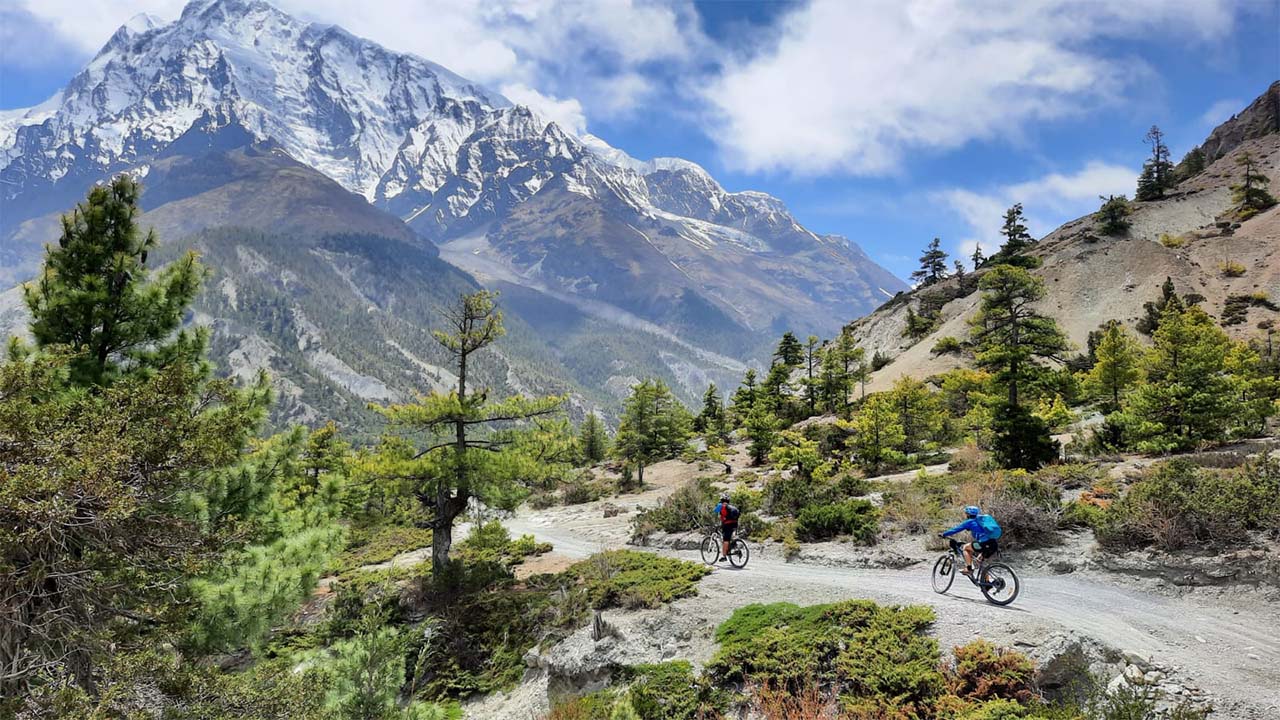
As you keep ascending further, the treeline starts to gradually disappear, and the wide alpine meadow will take over. Enjoying the stunning mountain views at the backdrop, you will then continue heading toward the stone-fenced fields that will eventually lead you to Dingboche Village.
Dingboche is also popular as the ‘Summer Valley,’ and you will find fields surrounded by stone walls everywhere. The fields are surrounded by stone to protect the crops from high altitude harsh climate and grazing animals.
Day 8 - Trek from Dingboche to Island Peak Base Camp
Island Peak Base Camp Altitude: 5,087m/ 16,689ft
Altitude Gain: 677m/ 2,221ft
After breakfast at Dingboche, you will make preparations to head toward the main goal of this thrilling Himalayan journey. You will continue walking on th ascending trails across the stone-fenced fields of the Imja Khola Valley.
On this part of the trail, you wil be able to enjoy the stunning view of Lhtose and Ama Dablam. Then, you will reach the Bibre Village, where you can see the Island Peak soaring over you.
You will then continue moving forward the trail intersected with icy streams to reach Chhukung Village. This is the last village enroute before the Island Peak. From here, you will continue heading further across the southern flank of Lhotse Glacier to reach Island Peak Base Camp.
Trek Duration: 4 to 5 hours
Trek Distance: 5km/ 3.1 miles
Day 9 - Acclimatization and Exploration
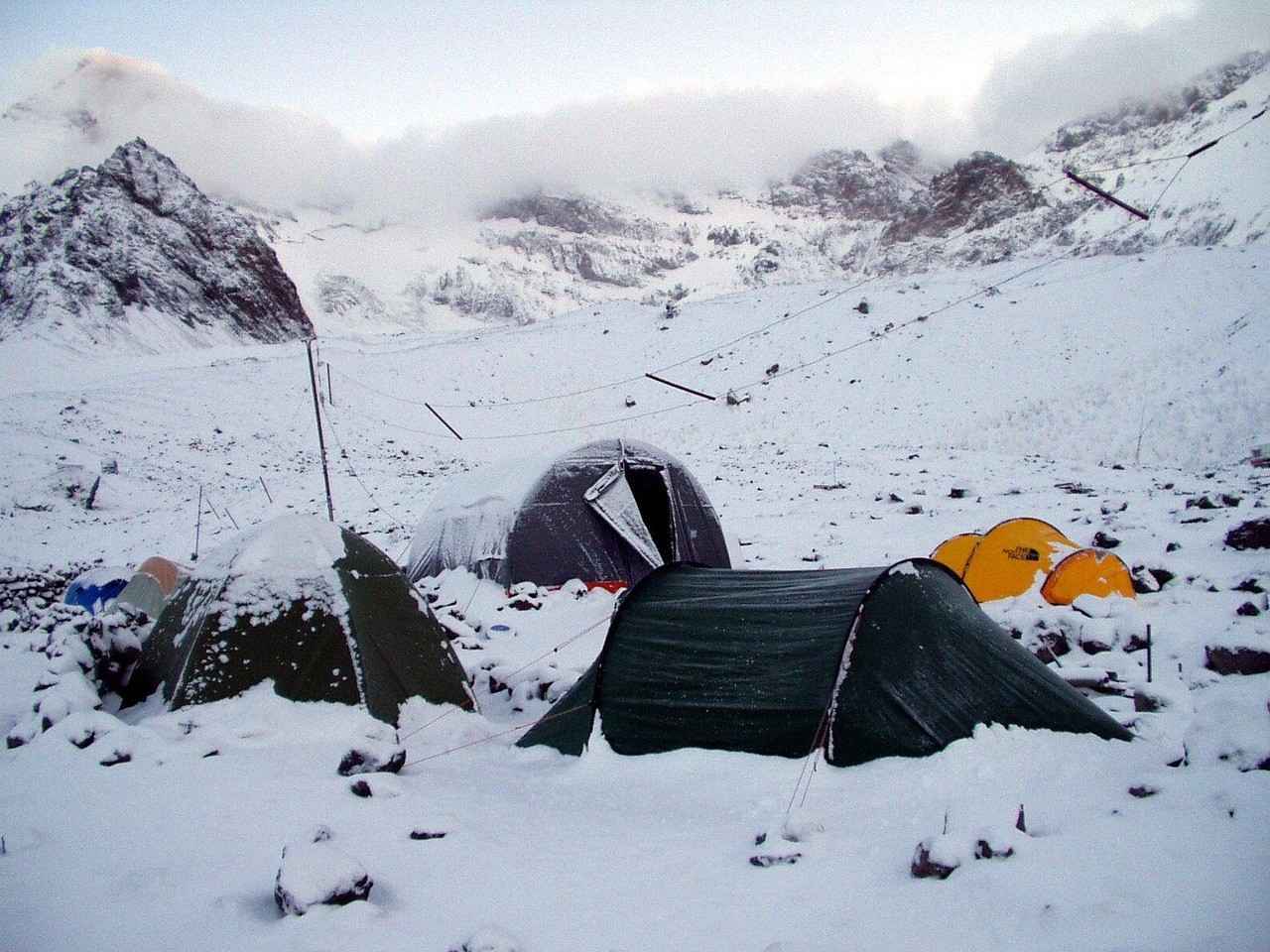
Before you take on the mountain slopes of Island Peak, you will enjoy an acclimatization day at its base camp. Like exploration day at Namche, you can do some short acclimatizing hikes around the base camp to admire the majestic views of the surrounding peaks.
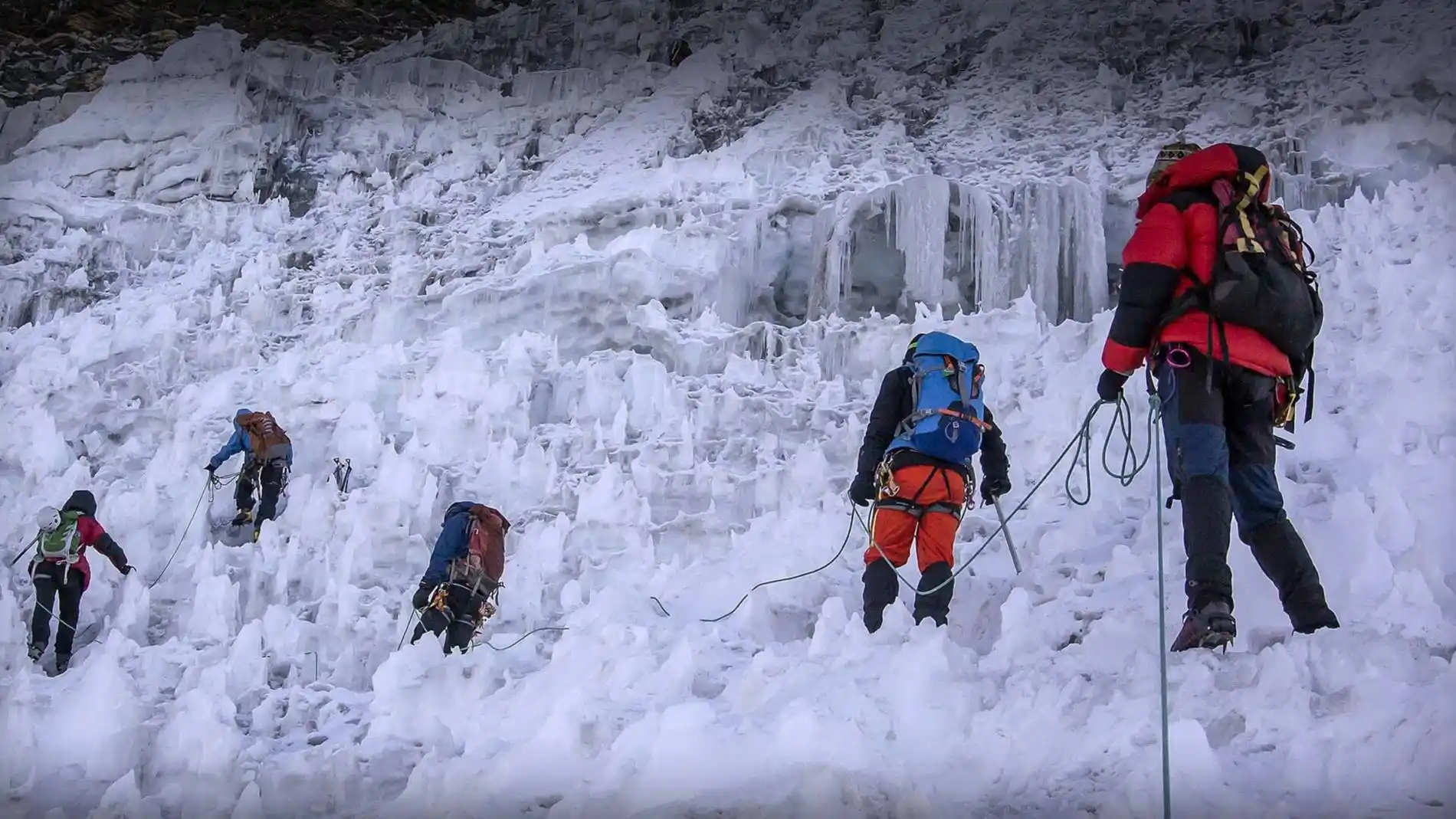
You will make all the necessary preparations today for the climb and check out the condition of your gear and its functionality. Your climbing guide will also organize practice climbing sessions and teach you the necessary skills to overcome the semi-technical sections on the mountain.
Today, you will turn in early for bed as your mountain scaling will begin before dawn tomorrow to avoid the harsh afternoon winds.
Day 10 - Island Peak Summit & Return to Island Peak Base Camp
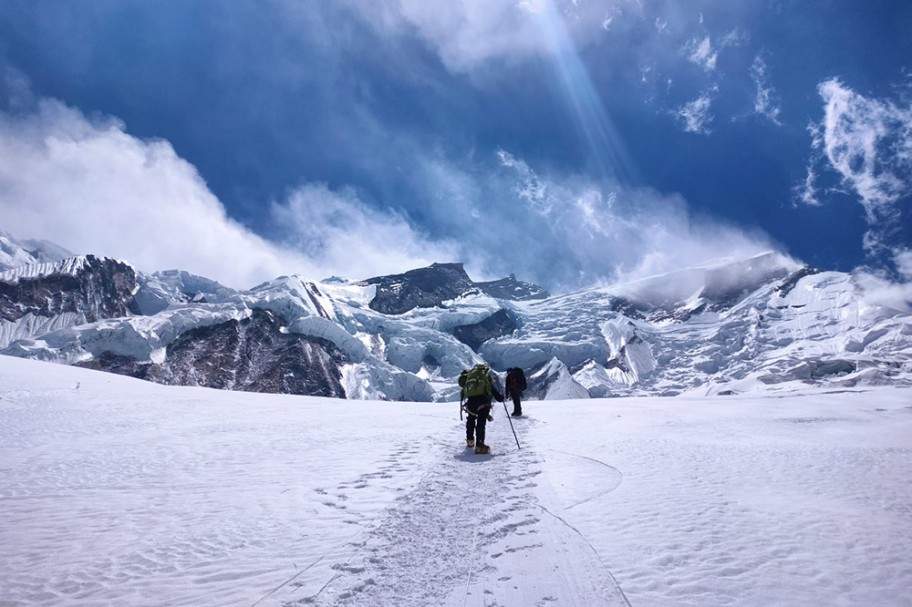
The big day is finally here today; you will push for the spectacular goal of this mountain scaling. You will enjoy your warm breakfast early in the morning and head toward the slope of the mountain. In the first part, you will ascend on the rocky ridge to head to the base of the glacier.
Following the footsteps of your mountain guide, you will navigate your way across the narrow slopes and steep rock channels. Then, moving along the exciting ridgeline, you will push toward the summit of the glacier.
Day 11 - Trek to Dingboche from Island Peak Base Camp
After celebrating your successful summit at the Island Peak Base Camp and cleaning up the camping site, you will then proceed with the descending part of this expedition. Navigating your way across the flank of the glacier, you will push for the Chhukung Village.
You will then continue trekking across the Bibre Village, enjoying the spectacular mountain views, and gradually make your descent to Dingboche.
Day 12 - Trek to Namche Bazaar from Dingboche
As you continue descending further down the trekking trail, you will enter the charming trails under the tree line. Following the downhill trail, you will cross the beautiful settlements of Somare, Orsho, and Pangboche to reach Tengboche.
The walk further ahead across the lush woodlands and Phunki Thenga Village will finally lead you back to the vibrant Sherap capital. After a long mountain journey, this return will make you feel like you have entered a modern civilization.
Day 13 - Namche Bazaar to Lukla Trek
This is the final day of trekking on your remarkable Himalayan journey. After enjoying your breakfast at Namche Bazaar, you will move along with the charming trails at the banks of the Dudh Koshi River.
The descent from Namche Ukalo across the lush trail will lead you across the beautiful Shera villages of Monjo, Bhenkar, and Tok Tok. You will continue trekking further and reach the Phakding Village.
From here, continuing alongside the banks of Dudh Koshi and ascending across Chaurikhakra Village will lead you back to Lukla. You will spend your night here today admiring the majestic Himalayan atmosphere.
Day 14 - Fly to Kathmandu from Lukla
On this day, you will part ways with the Himalayas and return back to the capital. Enjoying the majestic aerial views of the mountain ranges, you will fly over deep valleys and lush hills to reach Kathmandu.
After you land at the TIA, our staff will escort you back to your hotel. Get some rest, and you can do sightseeing around the city during the day. Thank you for doing this expedition with Nepal Guide Treks.
Enjoy your stay in Nepal, and have a safe journey.
Day 15 - Final departure from International Airport
Today is finally the last day of the Island Peak Climbing itinerary. As soon as you board your international flight back to your own country, our journey together will end but the memories remain. We hope we can make similar memories yet again in the future. I hope you have a safe flight back.
Maps
Frequently Asked Questions
Island Peak is considered a moderately challenging climb, suited for individuals with previous mountaineering experience or strong trekking and physical conditioning. The technical aspects, such as ice climbing, rope handling, and glacier travel, require preparation. While it is not as challenging as higher peaks like Everest, it still presents a significant test at altitude, particularly for those not acclimatized.
While previous climbing experience is not mandatory, it is highly recommended. A basic understanding of mountaineering skills, such as using crampons, ice axes, and ropes, is essential. Many climbers undertake preparatory courses before attempting Island Peak. For those new to climbing, some operators offer training sessions during the trek, especially on climbing techniques and safety.
Island Peak stands at 6,189 meters (20,305 feet), and altitude sickness can affect climbers above 3,500 meters (11,500 feet). Acclimatization is key to minimizing risks, so climbers must take time to adjust to the altitude gradually. Symptoms of altitude sickness include headaches, dizziness, nausea, and shortness of breath. Climbers are advised to take rest days to allow the body to acclimatize.
Avalanche risk on Island Peak is relatively low, but it is still present, particularly after heavy snowfall or during warmer weather. The experienced guides accompanying the expedition will assess the conditions regularly and take the necessary precautions. Climbers are advised to follow their guide’s instructions and avoid unnecessary risks.
From $2,055.00
Book This Tour

From $2,055.00
Book This Tour
You might also like