Shishapangma Expedition
- 38 Days
Adult
Description
Duration
38 Days
Group Size
1-12+

Shishapangma Expedition Overview
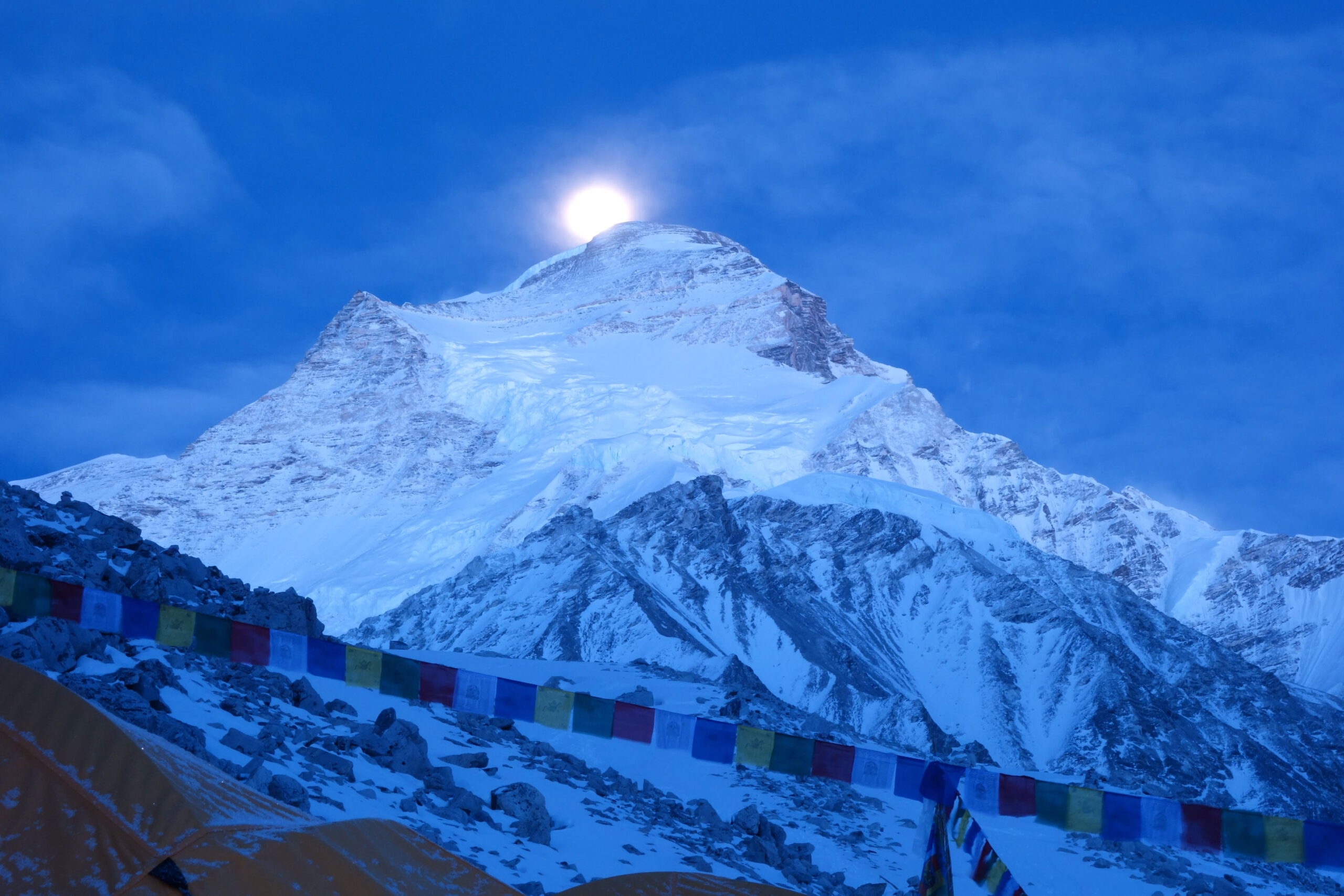
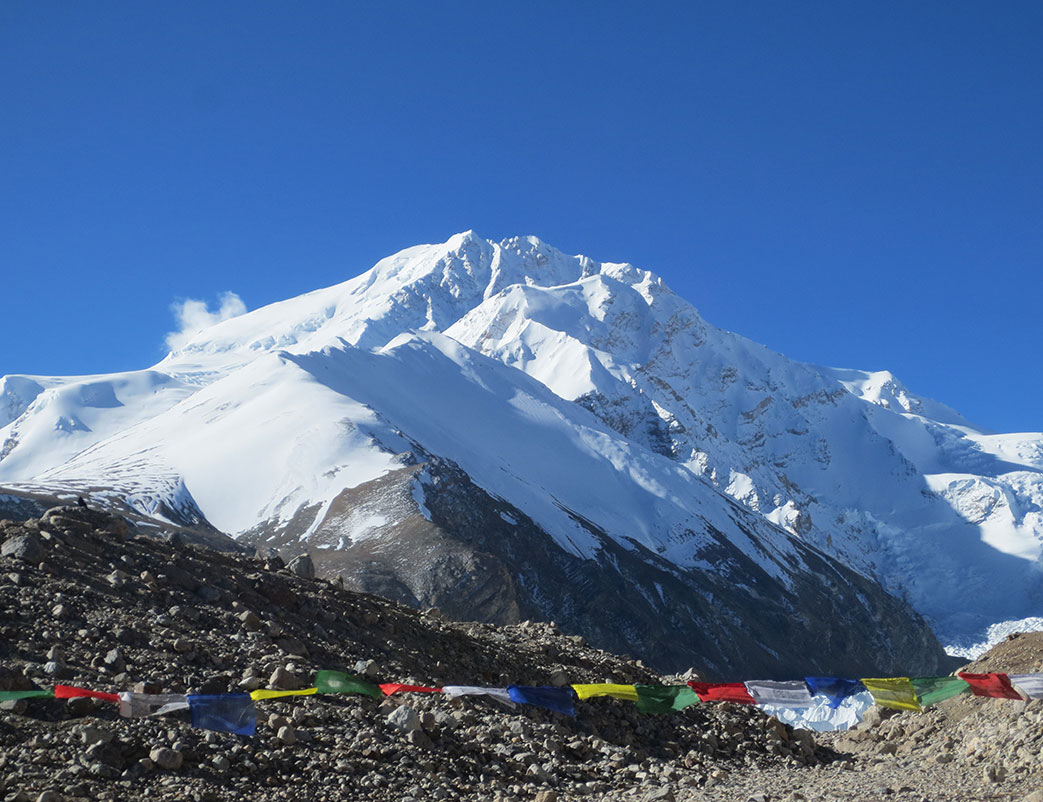
Shishapangma Expedition (8027m) also called Xixapangma meaning "the mountain overlooking the grassy plains" in the local Tibetan language at an elevation of 8027m, is the 14th highest peak in the world situated entirely in Tibet. Also, The Indian Nepalese name for this pea is Gosainthan meaning a holy place.
The first ascent to this stunning peak was made in 1964 by Xu Xing and his team of 10 climbers. Despite being the easy 8000er, Sishapangma was the last 8000er to be scaled. The climb is quite technical and is characterized by a long, steep southern face that rises over 2000m, a jaw-dropping view to all beholders. There have been numerous successful ascents to the peak but most climbers only make it to the West/Central summit at 8013 m. The main summit lies a few hours away from the central summit but is too technical and difficult. The climbing route goes through the snow and ice climb requiring crampons and ice axes with fixed ropes along the route.
Our journey to Shishapangma Expedition (8027m) in 2026 starts at Kathmandu taking us all the way to the Nepal- China border, Kerung. Then we cross the border and stay in the beautiful old Tibetan town of Tingri. We then drive to the Base camp at 5000 m, eliminating the trekking time.
Included
- To ensure your safety and provide a smooth arrival experience, Asian Adventures offers complimentary airport pick-up and drop-off services for both international and domestic arrivals and departures.
- Representatives of Asian Adventures will be waiting for you at the airport with an Asian Adventures banner and your name placard for easy identification. The representative will also carry an official company ID card for verification.
- According to the trekking package itinerary, Asian Adventures arranges three nights of accommodation in Kathmandu in your selected hotel category, ranging from tourist-standard to five-star hotels.
- Asian Adventures provides experienced, government-authorized (licensed) high-altitude trekking guides throughout the trekking period.
- Surface transportation required during the trek and in major cities, as specified in the itinerary, is included.
- As per the itinerary, Asian Adventures arranges regular domestic flight tickets from Kathmandu to Lukla and Lukla to Kathmandu for trekking members and guides.
- During the trek, Asian Adventures provides comfortable accommodation in carefully selected tea houses (excluding chain hotels).
- Most lunches are taken along the trekking route, while breakfast and dinner are served at the tea house where you stay overnight. Asian Adventures provides clean and freshly prepared breakfast, lunch, and dinner, along with tea or coffee, from the tea house menu throughout the trek.
- To ensure your comfort and protection from cold weather, we provide clean and warm down jackets and sleeping bags during the trek.
- Asian Adventures allows up to 15 kg of personal trekking equipment per person, carried by porters, yaks, or mules during the trekking period.
- Since Everest Base Camp lies within the Sagarmatha National Park area, Asian Adventures provides all required national park permits.
- The Trekkers' Information Management System (TIMS) permit is mandatory for trekking in the Everest region. Asian Adventures arranges this permit for all trekkers.
- First-aid medical kits are provided for both trekkers and staff to ensure health and safety during the journey.
- Communication is an important safety factor in remote Himalayan regions. Therefore, Asian Adventures equips trekking guides with satellite phones for emergency situations.
- During your trek, Asian Adventures ensures clean, nutritious, and freshly prepared meals at tea houses.
- The quoted package price includes all official service charges, government fees, taxes, and VAT. There are no hidden costs beyond the stated price.
- Before departing Kathmandu, we invite you to join us for a farewell dinner at a traditional Nepali restaurant with a cultural performance. This provides a wonderful opportunity to experience Nepali culture and traditions.
- As a souvenir of your Himalayan adventure, Asian Adventures will present you with an Asian Adventures T-shirt, Pashmina, and company brochure before your departure.
Excluded
- Kathmandu offers a wide variety of high-quality restaurants serving Nepali and international cuisine. Therefore, lunch and dinner in Kathmandu (except the farewell dinner provided by Asian Adventures) are not included in the package cost and must be arranged by the client.
- Personal expenses such as snacks, packed foods, chocolates, energy bars, mineral water, soft drinks, energy drinks, alcoholic beverages, and cigarettes during the trek are not included. These items can be purchased individually according to personal preference.
- Expenses related to personal trekking equipment, laundry services, gratuities (tips), telephone calls, mobile services, internet usage, walkie-talkies, satellite phone usage, and other personal communication services are not included in the package.
- Trekking in the Himalayas is an adventurous activity conducted in remote mountain regions. For your safety, all participants must obtain comprehensive travel insurance before arriving in Nepal. The insurance policy should cover emergency helicopter evacuation, medical treatment, hospitalization, and other related expenses.
- International airfare to and from Nepal and the Nepal tourist visa fee are not included in the package cost and must be arranged by the traveler.
- Any additional expenses arising from unforeseen circumstances beyond our control, including natural disasters, adverse weather conditions, landslides, political disturbances, strikes, flight delays or cancellations, and changes in government regulations, are not included in the package cost.
- Costs associated with additional staff or services requested beyond those specified in the package are not included and will be charged separately.
- Any services not specifically listed under the "Package Includes" section will be considered additional services and will incur extra charges.
- Tipping is not included in the package price. Tipping guides, porters, and support staff is a customary practice in Nepal's trekking industry and is greatly appreciated as recognition of their hard work and service. The amount is entirely at the discretion of the client.
Travel Itinerary
Day 1 - Arrival In Kathmandu And Rest At The Hotel
Upon your arrival at the airport, you will need to obtain Nepal Entry Visa at the counter. After these procedures, one of our representatives will meet and greet you and transfer you to the pre-booked 3-star hotel for you to rest. You can freshen up and enjoy your evening in Thamel.
Day 2-6 - Rest And Official Formalities, Processing Your Tibet Visa, Expedition Briefing, Checking Gear And Shopping.
Expedition to Sishapangma takes us through Tibet which is why we need to obtain VISA for China and also require permits to climb Sishapangma. Although we do have an incredible logistics team in Tibet, we will still ensure perfect management of each and every aspect during the expedition. In the course of preparation, you will have enough time to go sightseeing around different world heritage sites in Kathmandu.
Day 7 - Drive To Timure (1900m).
Our journey starts early in the morning after a warm and fulfilling breakfast at the hotel. We will drive to Timure, a small village in the Gosaikunda Rural Municipality. The drive will be quite tiring as we travel on bumpy roads up the hills, but nature’s beauty will deviate the pain towards tranquillity and peace.
Day 8-10 - Cross Nepal China Border And Drive To Kerung (1,962 M).
After completing border formalities at the Nepal-China border, we cross into Tibet and begin our scenic drive to Kerung (1,962 m). The journey offers stunning views of valleys and mountains as we gradually ascend into the Tibetan plateau. Kerung serves as our first stop inside Tibet for acclimatization and rest.
Day 11-12 - Drive To Tingri And Acclimatize (4300 M).
After Kerung, we will then cross the border and enter Tibet, the autonomous state of China. We continuously drive uphill and finally reach Tingri. Tingri is an old settlement in Tibet that used to be an important trading point for farmers in Nepal and Tibet. The beautiful meadows, rivers with fresh water, and picturesque villages make Tingri a beautiful place to stop and acclimatize.
Day 13 - Drive To Shishapangma Chinese Base Camp (5,220 M).
From Tingri, we drive to the Chinese Base Camp for Sishapangma and stay 1 more day for acclimatization. We must allocate some good time for acclimatization as we will be gaining high altitude within a day as we drive instead of trekking.
Day 14 - Drive To Shishapangma Advance Base Camp (5,400 M).
We will be driving only to the Chinese Base Camp. After acclimatizing for two more days, we will then trek towards the Intermediate Camp. Our luggage and logistics will be carried by Yaks and Porters to the Advanced Base camp. At the altitude of 5400 m, we will set up our Advanced camp with full board tented service.
Day 15-30 - Climbing Period: Route Fixing, Rotations, Summit Push And Contingency Day.
The climbing period will be utilized for proper training and acclimatizing for the summit Push to Sishapangma. We will allocate enough time to train with the climbing equipment. The climb above the advanced base camp follows the glacier on an easy slope where we set up Camp 1 at 6300 m. Then, following the glacier, we reach our campsite at camp 2 at an altitude of 6900 m. Camp 3 will be set up at 7300 m which will help us for the summit push.
The climb to the summit from camp 3 takes about 12 hours and requires walking on steep snow slopes. Our extraordinary team of Sherpa will facilitate all the required gear and equipment. We will serve hot meals and high-altitude food to keep you in good shape for the climb.
Upon reaching the summit, climbers will be rewarded with mesmerizing views of Cho Oyu, Mt Everest, Mt. Lhotse, and other giant peaks in Nepal as well as Tibet.
Then, we descend to the advanced base camp through the higher camps.
Day 31 - Clean Up Base Camp And Prepare For Return.
We clean up Shishapangma Base Camp, responsibly collecting all waste and dismantling camp setups to leave the area clean and undisturbed. With our gear packed and logistics arranged, we prepare for the return journey, carrying memories of a remarkable expedition on one of Tibet’s most iconic peaks.
Day 32 - Drive To Tingri.
We drive to Tingri, a small Tibetan town offering panoramic views of the Himalayas, including Everest and Cho Oyu. The scenic journey across the high plateau provides a chance to rest and acclimatize further, as we prepare for the next stage of our return from the Shishapangma expedition.
Day 33 - Drive To Kerung.
We continue our drive to Kerung, descending from the Tibetan plateau through winding mountain roads. Along the way, we enjoy breathtaking views of valleys, rivers, and snow-capped peaks. Kerung, located near the Nepal-China border, serves as our final stop in Tibet before crossing back into Nepal.
Day 34 - Cross Border To Nepal And Drive Back To Kathmandu.
After completing immigration formalities at the Kerung-Rasuwa border, we cross into Nepal and begin our drive back to Kathmandu. The journey offers a dramatic change in scener from the arid Tibetan plateau to lush Nepali hills bringing our expedition to a close as we return to the vibrant capital city.
Day 35-37 - Leisure Day In Kathmandu.
Kathmandu is a beautiful city with numerous attractive destinations. There are many heritages listed in the World Heritage List as well. You can go sightseeing around Bhaktapur, Patan, Bouddhanath Stupa, Swayambhunath, Pashupatinath Temple, or even roam around in the streets of Thamel trying some exotic cuisines. You can get beautiful souvenirs in Kathmandu that you can take back home for your loved ones.
Day 38 - Final Departure
If you have not signed up for any other Add-ons Adventure packages, it’s time to bid you farewell. One of our representatives will drop you off at the airport 3 hours prior to your scheduled departure.
Maps
Frequently Asked Questions
Mount Shishapangma (Xixiabangma as spoken in Chinese) is the lowest 8,000-meter peak among fourteen peaks of the world. Though, it is the lowest mountain peak, it is not as easy as other peaks to climb. Basically exposed summit ridge, and steeper sections make this peak extreme to climb. If you are considering climbing Mount Shishapangma, you must first ask yourself several honest questions: Am I physically fit enough? Am I technically capable of handling the expected terrain and conditions? Am I mentally and emotionally strong enough for high-altitude expeditions? The Himalayan peaks demand honesty – with yourself first, then with your climbing partners and the expedition organizer. At times during a climb, your life may depend on another person’s awareness and skill, just as their life may depend on yours.
Climbers often choose Mount Everest for the fame that comes with standing on the highest point on Earth. However, reaching the top of the world is not an easy feat and requires proper experience, training, and strong physical endurance. For this reason, Shishapangma provides an excellent starting point for climbers who want to begin their journey into 8,000-meter peak climbing. This peak is the 14th highest mountain peak in the world. If you want to climb 8,000 m peak which is less commercial and more alpine feeling, or aspire to complete 14 × 8000-meter climber, Shishapangma is a good choice.
Being fourteenth highest mountain peak and the lowest among 8,000ers, Mt. Shishspangma is not the easiest to climb though. Here, is a brief comparison of climbing Shishapangma with other high mountains. Among the 8,000-meter peaks, Mount Annapurna I (8,091 m / 26,545 ft) has a much higher fatality rate and is often considered the deadliest. Mount Dhaulagiri and Kangchenjunga are extremely brutal and are regarded as some of the hardest 8,000-meter peaks to climb. Mount Manaslu (8,163 m / 26,781ft) is moderately technical, with a more straightforward route compared to many other 8,000-meter mountains.
As we have a trained and experienced high altitude expedition cooks, they serve you scrumptious, nutritious, and healthy food. We use fresh vegetables whenever possible and have an extensive culinary repertoire. You are in fact encouraged to request your personal favorites to maintain good appetite and ensure you get enough calories. At higher camps we use freeze-dried packaged foods sourced from the USA or UK. These foods are high-quality, flavorful and easy to prepare at higher altitude. Your personal climbing Sherpa will melt sufficient ice for hot water, tee, coffee and a variety of juices. Different flavors of tea, coffee, snacks, juice and hot water will be available 24 hours a day ensuring you stay nourished and well hydrated throughout your expedition.
Climbing Shishapangma successfully is not that easy feat. There are many components that can determine the success or failure of your expedition. Here, we list some noteworthy components based on our experience so you can prepare yourself for the success accordingly.
- Personal physical and mental fitness as well as previous climbing experiences
- Personal climbing Equipment
- Weather conditions and Timing
- Personal climbing Sherpa guide and their experiences
- Local operator’s ability and experiences as well as enough resource management
From $32,500.00
Book This Tour

From $32,500.00
Book This Tour
You might also like